
Menu
In a world where data is being generated at an unprecedented rate, businesses are constantly searching for cost-effective storage solutions. The expenses associated with traditional data storage methods can quickly spiral out of control, leaving many organisations scrambling for budget-friendly alternatives. Enter the active data archive an innovative approach that utilises tape technology to offer significant savings.
You might be thinking, "Isn't tape dead?" Surprisingly, it's very much alive and thriving in the realm of active archiving. As we dive deeper into how an active data archive using tape can save you money, you'll discover why this old-school method is making a remarkable comeback in modern digital strategies. Let's explore the benefits and potential it holds for your organisation while shedding light on its role in shaping the future of data storage.

As the digital landscape evolves, data storage costs are surging. Organisations generate vast amounts of information daily, increasing their reliance on scalable and efficient storage solutions.
Traditional methods like hard drives and cloud services often come with hefty price tags. Costs for maintaining hardware, energy consumption, and ongoing subscription fees can quickly add up. Companies find themselves investing significant resources just to keep pace with their expanding data needs.
Moreover, the rise of compliance regulations adds another layer of expense. Storing sensitive information securely while ensuring easy access becomes a financial burden many struggle to manage.
In this climate, businesses must re-evaluate how they archive data effectively without breaking the bank. Innovative approaches that leverage existing technology could offer a viable solution in times where budgets are tight, but demand is high.
Despite advancements in digital storage, tape remains a relevant technology. Its resilience and reliability are key factors that keep it alive.
Tape offers remarkable longevity. Data stored on magnetic tapes can last for decades if properly maintained. This durability is appealing to organisations with critical data they need to preserve over time.
Cost-effectiveness makes tape an attractive option as well. Compared to other storage methods, the price per gigabyte is significantly lower. For large volumes of data, this translates into substantial savings.
Another reason for its persistence lies in the evolving technology surrounding tape itself. Modern innovations have improved speed and capacity, allowing it to compete effectively with disk-based systems.
Compliance requirements drive many businesses back to tape solutions. Regulations often mandate long-term data retention, making tape an ideal choice for archiving sensitive information securely and efficiently.
Its offline nature also provides an added layer of security, protecting data from cyber threats.
An active data archive is a storage solution designed to manage large volumes of infrequently accessed data while keeping it readily available. Unlike traditional archives, which often require laborious retrieval processes, an active archive allows for quick access.
It typically employs a tiered storage approach. Frequently used data resides on high-performance storage systems, while less critical information moves to more economical options, such as tape. This ensures that costs remain low without sacrificing accessibility.
Data within an active archive can be automatically moved between different tiers based on usage patterns and organisational policies. This intelligent management keeps operational efficiency high and reduces the risk of losing valuable information over time.
With seamless integration into existing IT infrastructures, organisations can streamline workflows and enhance productivity by leveraging both old and new technologies in tandem.
Enterprise-Grade IBM Tape Solutions for Secure, Long-Term Data Protection
we offer advanced tape storage solutions designed to meet the growing demands of data-intensive businesses.
LTO Ultrium family, providing scalable, cost-efficient storage for long-term retention, backup and archive.
Tape storage offers remarkable cost efficiency for active data archives. Compared to traditional hard drives and cloud solutions, tape media typically has a much lower cost per gigabyte. This translates into significant savings over time as your data needs expand.
Durability is another vital benefit. Tape cartridges can last decades when stored properly, ensuring that your archived data remains accessible long-term.
Moreover, tape technology has made impressive strides in speed and performance. Modern tape systems now support faster read/write capabilities, enabling quick access to important information whenever necessary.
Additionally, using tape enhances security for sensitive data. Offline storage minimises the risk of cyber threats since tapes aren't connected to the internet or local networks during idle times.
Energy consumption with tape systems is minimal compared to spinning disks. Less power usage leads not only to reduced operational costs but also aligns with environmentally friendly practices.
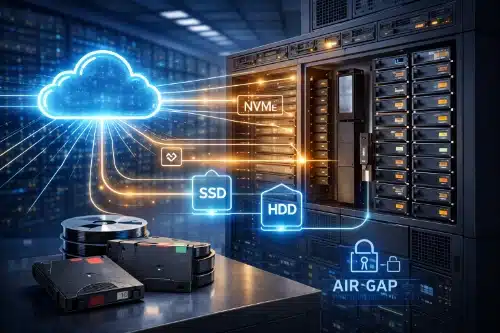
Tape today sits on the periphery of many organisations plans for data storage. But many hyperscalers still use tape in their vast datacentres. With cloud, NVMe, SSD’s and HDD’s all taking centre stage. But as we highlighted earlier costs for data storage equipment is skyrocketing.
By deploying a tape layer unused data can be automatically moved from whatever tier you have setup to tape and with the speed improvements mentioned below, speed of access isn’t such a problem anymore. With even the smallest tape libraries easily storing a Petabyte of data, it’s a very affordable alternative to the above aforementioned technologies.
The ability to integrate into your current workflow makes deploying tape far easier than before. With a choice of SAS, Fibre Channel and now S3 connectivity this makes choosing tape as part of your organisations infrastructure far easier and saves on increasing cloud costs.

Object storage on an LTO-10 tape with an S3 interface allows organisations to scale from TB’s to multi PB’s simply. This is particularly useful for organisations where data doesn’t need to be accessed quickly or data that needs to be kept. The tape library could reside on your premises or a co-lo and thereby avoiding the traditional delays associated with cloud vendors current retrieval times and the egress fees.
Another huge benefit that is becoming more of a concern for organisations is data sovereignty. An on-premises S3-to-tape setup ensures strong data sovereignty, allowing organisations to maintain full control over their data and security within their own infrastructure. At the same time, tape’s inherently offline nature, combined with Air-Gap protection, delivers a robust defence against cybercrime and ransomware attacks.
Here we write about the many benefits that tape provides and LTO has a roadmap out until 2040. Today we have LTO-10 launched in June 2025 and in 2026 they launched the LTO-10E tape that stores 40TB natively and 100TB compressed. But that is only part of the story. LTO-10E has a 4GB cache memory buffer to help with error correction, tapes no longer need formatting (time savings around 2 hours per tape), 32Gb FC connectivity, and the biggest benefit is the enhancements made to RAO (Recommended Access Order) with access to data gains of 55%-85% over previous generations using the processor within the LTO drive to sequentially index the required restores.
A leading financial institution transitioned to an active data archive using tape technology. They managed to reduce their annual storage costs by nearly 50%. By efficiently migrating historical transaction data onto tapes, they freed up expensive primary storage while maintaining quick access for compliance audits.
In the healthcare sector, a large hospital system implemented tape archiving for patient records. This approach not only cut down on server expenses but also simplified their backup processes. The result? A more streamlined operation with substantial savings that could be redirected toward patient care initiatives.
Meanwhile, a global manufacturing company faced challenges managing vast amounts of product design files. By utilising tape archives, they optimised their workflow and reduced overhead costs significantly. Their ability to store massive datasets affordably helped them remain competitive in the market without sacrificing quality or efficiency.
Implementing an active data archive using tape in your organisation begins with assessing your current storage needs. Understand which data is essential for daily operations and what can be archived.
Next, choose the right tape technology that fits your requirements. Modern LTO (Linear Tape-Open) tapes offer high capacity and durability to ensure long-term data preservation.
Integrate a robust archiving software solution that streamlines the process of moving data from primary storage to your tape archive. This software should automate tasks and provide easy access to archived information when needed.
Train staff on how to manage this new system effectively. Familiarity will boost confidence in utilising the active data archive efficiently.
Establish regular audits and maintenance checks on both hardware and software components. This proactive approach will help maintain optimal performance over time, ensuring you always have quick access to archived files.
As data continues to grow exponentially, the need for efficient storage solutions becomes paramount. Emerging technologies are reshaping how we think about data management. Among these, tape technology is making a surprising resurgence.
Tape has evolved significantly over the years. Modern magnetic tapes offer impressive capacities and faster access times than ever before. They provide a cost-effective solution for long-term storage without compromising reliability.
Furthermore, with advancements in AI and machine learning, managing tape archives is becoming easier. Organisations can automate backup processes and retrievals, enhancing efficiency while reducing operational costs.
Sustainability also plays a role in tape's future. As companies seek greener alternatives to traditional hard drives and SSDs, tape presents an environmentally friendly option due to its lower energy consumption during idle periods.
As businesses strive to balance performance with budget constraints, it seems that the future of data storage might just find its footing alongside tape technology once again.
The landscape of data storage is rapidly evolving, driven by the exponential growth of digital information and the rising costs associated with maintaining that data. As organisations scramble to find efficient and cost-effective solutions, many are rediscovering tape technology.
The perception that tape is a relic of the past has been challenged by its practicality for active archiving. Unlike traditional methods, which often require expensive disk-based systems or cloud services with recurring fees, an active data archive using tape can provide significant savings without sacrificing accessibility.
An active data archive functions as a tiered storage solution where infrequently accessed data is moved from primary storage to a more economical medium - tape. This not only reduces overhead costs but also ensures compliance with regulations regarding long-term retention.
Many companies have successfully implemented tape archives as part of their strategy to manage growing volumes of unstructured data. Case studies reveal substantial reductions in both operational expenses and capital expenditures when utilising tapes for archiving purposes.
For organisations considering this route, implementing an active data archive with tape involves assessing current workflows, determining what needs to be archived versus what's actively used, and investing in robust infrastructure designed around modern tape technology.
As we look ahead at future developments in data storage technologies, it's clear that tape will continue playing a vital role alongside other emerging solutions. Its ability to offer low-cost mass storage while remaining reliable makes it indispensable in any comprehensive archiving strategy.
Choosing an active archive using tape could not only streamline your operations but also lead you toward significant financial benefits over time. The wisdom behind this approach lies in being proactive about your organisation's archival needs today so you can save tomorrow.
If you want to learn more about tape data archiving, please complete the form below and we will happily discuss the solutions available.
