
Menu
In our earlier articles, we examined the performance and cyber-resilience implications of FlashCore Module 5 within IBM FlashSystem.
AI-driven data services. The term is widely adopted across the industry. The question is whether it represents genuine operational change — or simply rebranded automation. From our perspective as an IBM Silver Partner, the answer depends entirely on how it is applied.
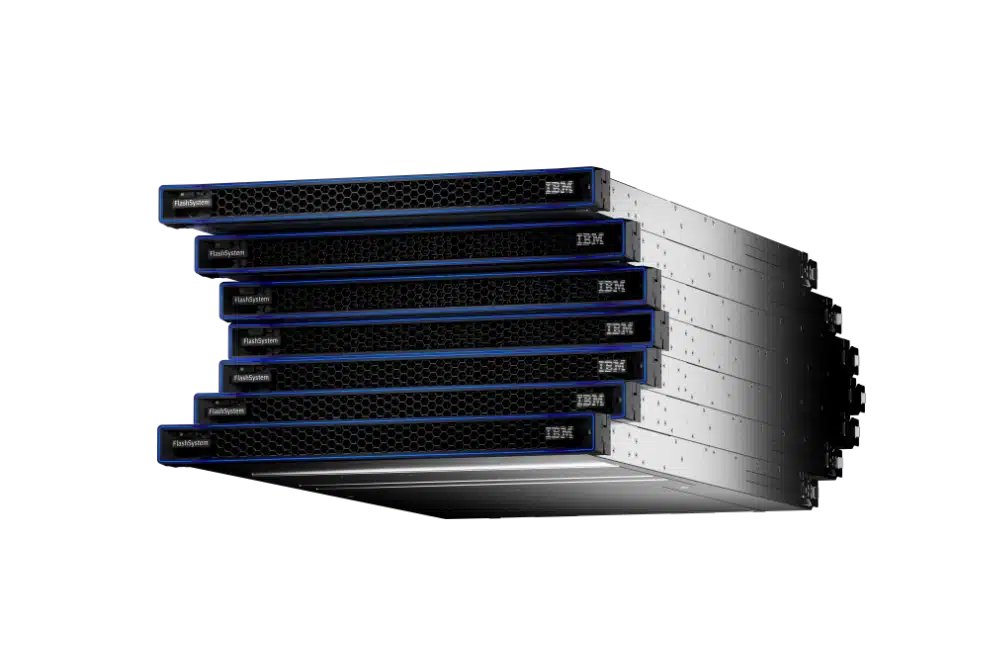
IBM integrates artificial intelligence capabilities into the FlashSystem platform through analytics and predictive tooling designed to optimise performance, capacity and reliability.
This includes:
The objective is not to replace infrastructure teams. It is to reduce reactive administration. The distinction matters.
Enterprise storage teams are managing:
At the same time, headcount rarely scales with infrastructure complexity.
An alert triggers. Latency increases. Capacity thresholds approach. Manual investigation begins.
AI-driven monitoring aims to identify patterns and anomalies before those thresholds become operational issues.
If successful, this shifts the role of the storage team from firefighting to optimisation.
It is important to separate two concepts. Automation executes predefined rules. AI-driven systems analyse behavioural patterns over time and generate insights based on observed trends.
In the context of IBM FlashSystem, AI capabilities are designed to:
This is not autonomous infrastructure. It is assisted infrastructure management. The operational value depends on whether these insights reduce manual effort and improve decision timing.
Unexpected storage expansion is one of the most common drivers of emergency procurement. Predictive analytics that model historical growth can support more disciplined refresh planning and budget alignment. If forecasting accuracy improves, procurement becomes strategic rather than reactive.
Workload behaviour changes over time. New applications are deployed. AI inference layers scale. Reporting cycles intensify. AI-driven analysis can detect shifts in read/write behaviour and surface performance optimisation recommendations before users experience degradation. In environments with fluctuating workloads, this reduces the risk of silent performance erosion.
Hardware components fail. Firmware requires updating. Latency anomalies emerge gradually before becoming critical. AI-driven analytics that monitor health trends over time allow earlier intervention. This does not eliminate operational risk. It reduces the likelihood of surprise.
Eliminate architectural mistakes. Replace sound capacity planning. Substitute for observability discipline. Remove the need for skilled infrastructure engineers. If an organisation lacks monitoring maturity or ignores analytics outputs, AI capabilities become underutilised features rather than operational improvements. In smaller estates with stable, predictable workloads, the incremental value may also be limited. Technology only becomes operationally meaningful when aligned with process.
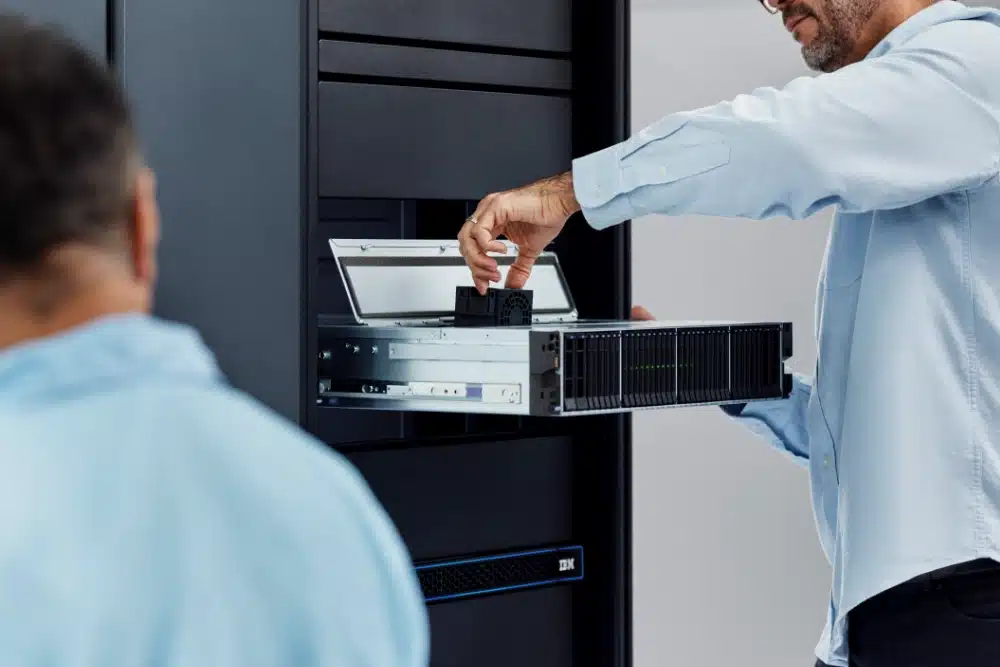
There is another dimension to this discussion. As enterprises adopt AI workloads, storage behaviour changes. Training environments generate heavy write activity. Inference layers generate repeated read access. Dataset iteration accelerates data movement patterns. AI-driven analytics within storage platforms help identify these behavioural shifts and optimise performance accordingly. In this context, AI-driven storage is not marketing symmetry.It is adaptive management responding to AI-driven workload evolution.
For CIOs and CTOs, the question is not whether AI exists in the storage platform.
Operational risk. Unplanned downtime. Reactive troubleshooting.Procurement surprises. If AI-driven data services shorten detection windows, improve forecasting accuracy and stabilise performance behaviour, they represent operational shift. If they simply repackage standard monitoring with new terminology, they do not. The evaluation must be practical.

We do not present AI-driven storage as transformation by default.
We assess:
Current operational maturity. Existing monitoring processes. Capacity forecasting accuracy. Performance variability under load.
In organisations where infrastructure teams are overstretched and workloads are dynamic, AI-driven analytics can materially reduce manual overhead and improve visibility. In highly stable environments with disciplined manual processes, the value may be incremental. Technology should be adopted because it changes operational outcomes — not because it aligns with industry vocabulary.
AI-driven data services within IBM FlashSystem represent an evolution in storage management. They aim to embed predictive insight directly into the platform rather than relying solely on external tools and reactive alerts.
For some enterprises, that is an operational shift. For others, it will remain a supporting enhancement. The determining factor is not the feature itself. It is the workload behaviour and operational maturity of the organisation deploying it.
