
Menu
In our previous articles, we explored what FlashCore Module 5 introduces inside IBM FlashSystem from hardware-level cyber resilience to architectural positioning.
Up to 2.4x higher read performance. The number is compelling. The question is whether it is relevant to your workload.
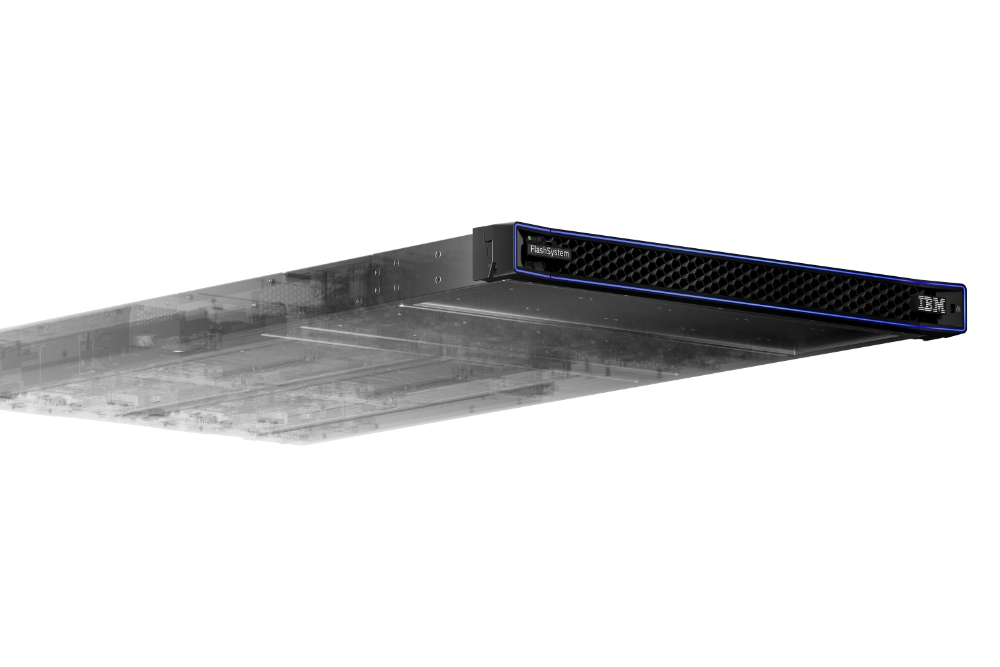
IBM positions FlashCore Module 5 (FCM5) as delivering up to 2.4 times higher read performance compared to the previous generation of FlashCore Modules.
First, this uplift is specific to read performance not balanced read/write behaviour. Second, “up to” is contextual. Performance depends on workload profile, queue depth, concurrency levels and system configuration. In practical terms, the improvement is most visible in environments where sustained or highly parallel read activity is a limiting factor. If read performance is not your bottleneck, the number may be strategically irrelevant.
Before evaluating generational improvement, you need clarity on one metric:
Your actual read/write ratio.
Many enterprise environments assume they are balanced.
In reality:
By contrast:
Are frequently write-dominant.
If your workload is predominantly write-heavy, a read-focused uplift may not materially change performance outcomes.
AI and Inference Workloads
Model training often involves significant writes. Model inference, however, can be highly read-intensive. As AI becomes embedded into operational systems, inference layers experience repeated model and dataset access under concurrency. If latency spikes under load, inference responsiveness degrades. In this context, read performance is not cosmetic. It directly affects application behaviour.
Quarter-end reporting. Dashboard refresh cycles. Regulatory reporting queries.
These events often create simultaneous read activity across large datasets. If storage struggles under parallel reads, query times increase and user confidence declines. Improved read bandwidth and latency stability can materially affect user experience in these environments.
VDI environments expose one of the most common concurrency stress tests: the login storm. Hundreds or thousands of virtual desktops initiating read activity simultaneously can overwhelm older flash generations. If FCM5’s improved read performance stabilises latency during these events, the operational impact is tangible. If your VDI estate is already performing within acceptable thresholds, the uplift may be incremental rather than transformational.

Peak IOPS figures are rarely the limiting factor in modern enterprise storage. Consistency under concurrency is.
“How fast is the array in isolation?”
“How does it behave when 300 processes hit it simultaneously?”
If your monitoring shows latency degradation during peak events, read-focused generational improvements deserve serious evaluation. If latency remains stable during business stress periods, performance uplift alone may not justify refresh.
Many refresh decisions are triggered by capacity expansion rather than performance degradation. If you are expanding because of growth rather than bottlenecks, you must determine whether read performance is constraining your environment or whether you are simply scaling storage footprint. In some estates, a refresh aligned with capacity growth creates an opportunity to benefit from generational performance improvements. In others, performance headroom already exceeds demand. The key is baseline data.
Latency spikes occur during read-heavy concurrency events. AI or analytics workloads are expanding and stressing existing arrays. Older FlashSystem generations are nearing refresh and struggling under new workload patterns. In these scenarios, improved read performance can reduce operational friction and extend architectural runway.
Write-dominant. Underutilised. Or not experiencing latency instability. Then the headline number should not drive decision-making. Infrastructure decisions should be triggered by constraint, not marketing.

We do not assess generational uplift in isolation.
Historical latency trends.
Peak event behaviour.
Read/write ratios.
Growth projections.
Application sensitivity to latency.
Only then can we determine whether 2.4x higher read performance translates into real operational improvement. For some enterprises, it will materially improve responsiveness and stability. For others, the business case will rest elsewhere resilience, density, lifecycle economics. Performance statistics are inputs. Architecture decisions are outcomes.
If you want to understand whether FlashCore Module 5’s read performance uplift is relevant to your workload profile. Request a storage architecture review with Fortuna Data. Not to adopt the latest generation. To determine whether it changes your environment.
